Faceless YouTube Channel Ideas

Stella writes SwipeStory guides about AI faceless video creation, short-form video strategy, creator tools, and automated publishing workflows.
The best faceless YouTube channel ideas in 2026 are the formats you can repeat without depending on your face, your daily life, or expensive filming. That usually means story formats, explainers, breakdowns, tutorials, and visual list content. If you want the fastest route from idea to finished Short, SwipeStory is the cleanest fit because it handles script generation, visuals, voiceover, captions, rendering, and publishing in one workflow.
The bigger point is this: a faceless channel idea is only good if it survives YouTube's current originality and monetization rules. As of May 3, 2026, YouTube still requires creators to meet the YouTube Partner Program thresholds, follow channel monetization policies, and avoid non-original or mass-produced Shorts if they want sustainable monetization. So the right niche is not just "what gets views." It is "what can I produce repeatedly with a clear point of view?"
Quick Answer
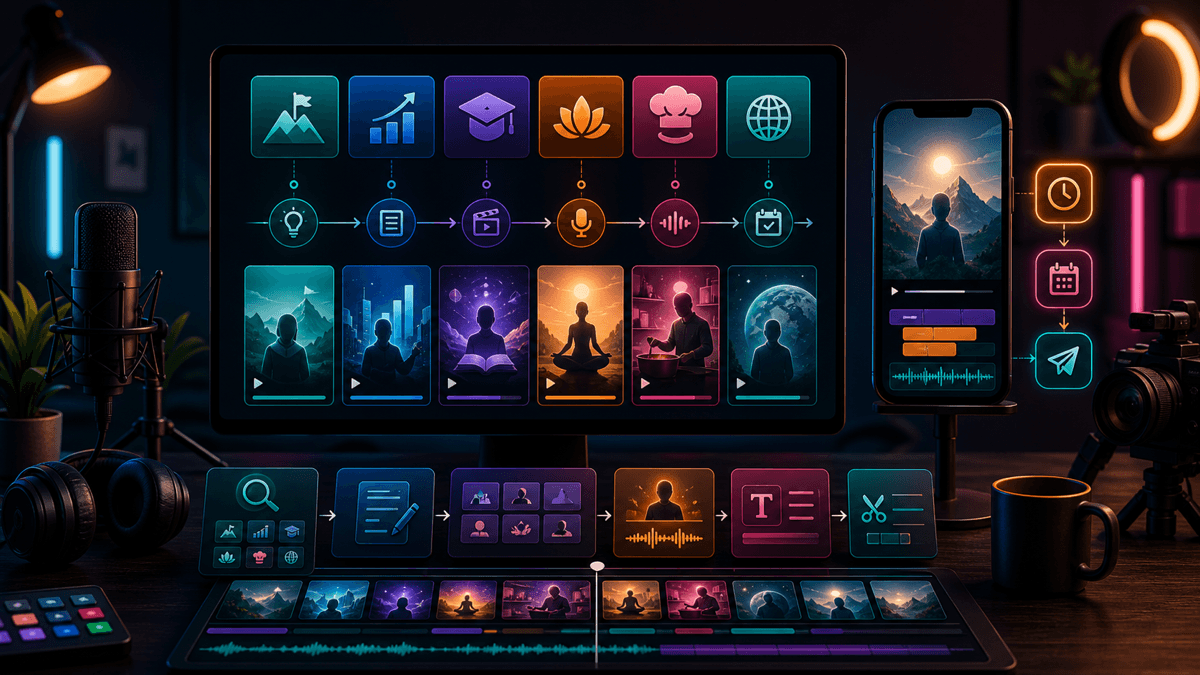
Start with one of these faceless channel angles:
- Finance explainers
- Productivity systems
- History shorts
- Science facts
- Career advice
- Software walkthroughs
- Book lessons
- Brand breakdowns
- Myth-busting
- Wellness habits
- Real estate market explainers
- AI tool tutorials
If you want a safer starting point, pick a niche where you can add commentary, examples, or a repeatable framework. That makes it easier to stay original and easier to scale with AI.
What Makes A Good Faceless Channel Idea?
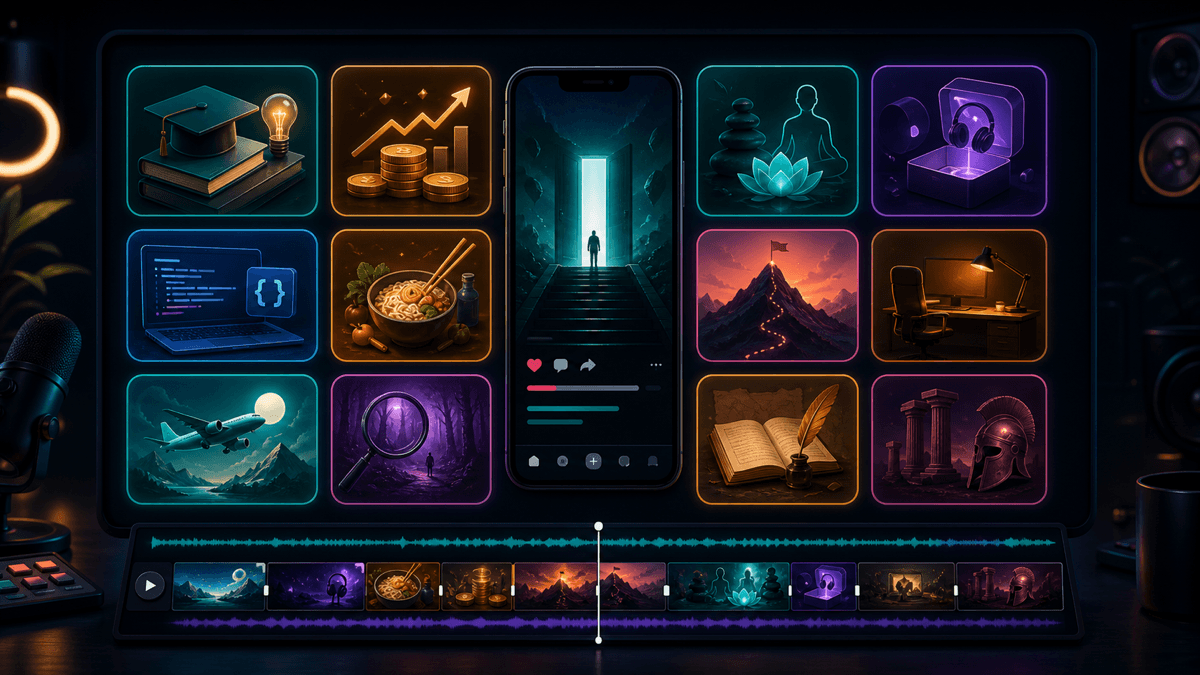
The best faceless YouTube channel ideas usually share five traits:
- They solve one recurring viewer problem.
- They work in a 20-180 second format.
- They can be explained with narration, visuals, captions, and examples.
- They leave room for your own framing instead of copying clips.
- They can turn into a series, not just one lucky video.
That last point matters most. Faceless channels rarely win because one video looks cinematic. They win because the creator builds a format that can be repeated 30, 50, or 100 times without running out of oxygen.
Current YouTube rules reinforce that. YouTube's Partner Program overview says creators can qualify with 1,000 subscribers plus 4,000 valid public watch hours in the last 12 months, or 1,000 subscribers plus 10 million valid public Shorts views in the last 90 days. YouTube also says channels must follow its monetization policies, have no active Community Guidelines strikes, and pass channel review. That means your niche should help you publish consistently, not just occasionally. Source: YouTube Partner Program overview & eligibility.
18 Faceless YouTube Channel Ideas Worth Testing
1. Finance Basics For Beginners
Break down credit scores, budgeting mistakes, ETFs, side hustles, taxes, or business models in plain language. This works because every topic can become a short series: "one money mistake," "one finance term," or "one chart that matters."
Prompt angle:
Write a 40-second Short explaining one beginner investing mistake with a direct hook, one example, and one practical fix.
2. Productivity Systems
This niche works especially well for Shorts because the format naturally fits quick frameworks: 3-step routines, planning mistakes, focus methods, and AI workflow tips. You do not need a talking head if the value is in the structure.
3. History In One Minute
Mini-history channels are still strong if they are tightly scoped. Instead of generic "facts about Rome," focus on one strange decision, one battle lesson, one empire mistake, or one overlooked turning point per video.
4. Science And Space Facts
Use simple narration with animated images or motion graphics. This niche gives you nearly endless prompts and performs well when each Short answers one curiosity-driven question.
5. Career Advice For Early Professionals
Resume fixes, interview mistakes, negotiation tips, workplace psychology, and "what your manager actually notices" all translate well into faceless Shorts.
6. Software Tutorials
This is one of the most practical faceless channel niches because the product itself becomes the visual. You can explain one tool, one workflow, one shortcut, or one AI use case per Short.
7. Book Lessons And Idea Summaries
Do not just recycle generic summaries. Package each video around one claim, one mental model, or one lesson applied to real life.
8. Brand And Marketing Breakdowns
Break down why a landing page converts, why an ad hook works, or why one offer feels premium. This niche is strong if you can add commentary rather than just screen recordings.
9. Myth-Busting Shorts
Take one popular idea in your niche and challenge it. This works in business, fitness, wellness, careers, and social media strategy because contrarian hooks earn attention quickly.
10. Wellness Habits
Sleep routines, walking habits, meal-prep ideas, stress reduction, and habit systems all work well when you keep the claims practical and avoid turning the channel into medical advice.
11. Real Estate Market Explainers
Instead of trying to be a full property influencer, simplify one mortgage concept, one market shift, one first-time buyer mistake, or one local-data lesson per video.
12. AI Tool Tutorials
This is one of the easiest niches to scale right now if you are comfortable researching product updates. New features create natural content ideas, and Shorts work well for focused demos.
13. Startup And Business Stories
Tell one brand story, one launch mistake, one pricing lesson, or one growth tactic at a time. The faceless format works because the hook carries the video more than the creator's personality.
14. Reddit-Style Storytelling
This still works, but only if you add structure, pacing, and a reason for viewers to care. If the channel is only copied screenshots plus an AI voice, it becomes much easier to drift into low-value repetition.
15. Language Learning Micro-Lessons
One phrase, one grammar mistake, one pronunciation tip, or one travel-useful sentence per Short. This format scales well because the learning unit is naturally small.
16. Design Critiques
Analyze logos, websites, ads, decks, thumbnails, or product pages. This gives you a clear visual hook while keeping the value in your commentary.
17. "Before You Buy" Tool Comparisons
Comparison content works because search intent is strong. People want a fast answer. One video can compare two tools, one pricing model, or one feature tradeoff.
18. Niche News Recaps
Instead of broad news, narrow down to one lane: creator economy updates, AI launches, app-store changes, ecommerce shifts, or finance headlines. The format is sustainable if you summarize, interpret, and explain instead of simply reposting.
Best Faceless Channel Niches By Goal
If your main goal is fast content volume, start here:
- AI tool tutorials
- Productivity systems
- Software walkthroughs
- Career advice
If your main goal is higher curiosity and watch-through rate, start here:
- History shorts
- Science facts
- Startup stories
- Myth-busting
If your main goal is stronger conversion into a product or service, start here:
- Brand breakdowns
- Design critiques
- Tool comparisons
- Real estate explainers
Originality Matters More Than Ever
This is the point where many faceless channels break down.
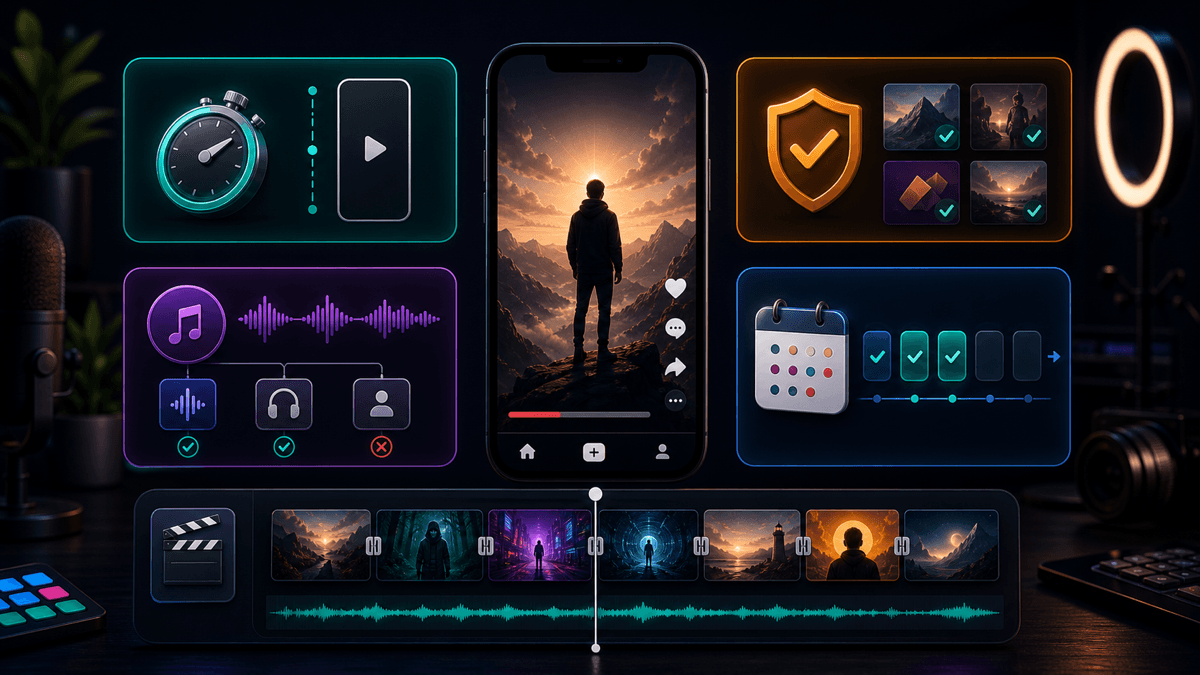
YouTube's Shorts monetization policies say non-original Shorts can become ineligible for revenue sharing. Its monetization policy pages also clarify that reused or mass-produced content is a channel-level problem, not just a single-video problem. In practice, that means faceless does not equal low-effort. If your channel mostly republishes clips, stitched screenshots, or thin compilations, it becomes harder to build a durable business.
The best faceless channel niches are the ones where you can add:
- a fresh script
- your own structure
- commentary or explanation
- custom visuals or scene selection
- a repeatable editorial point of view
The safer your workflow is on originality, the easier monetization becomes later.
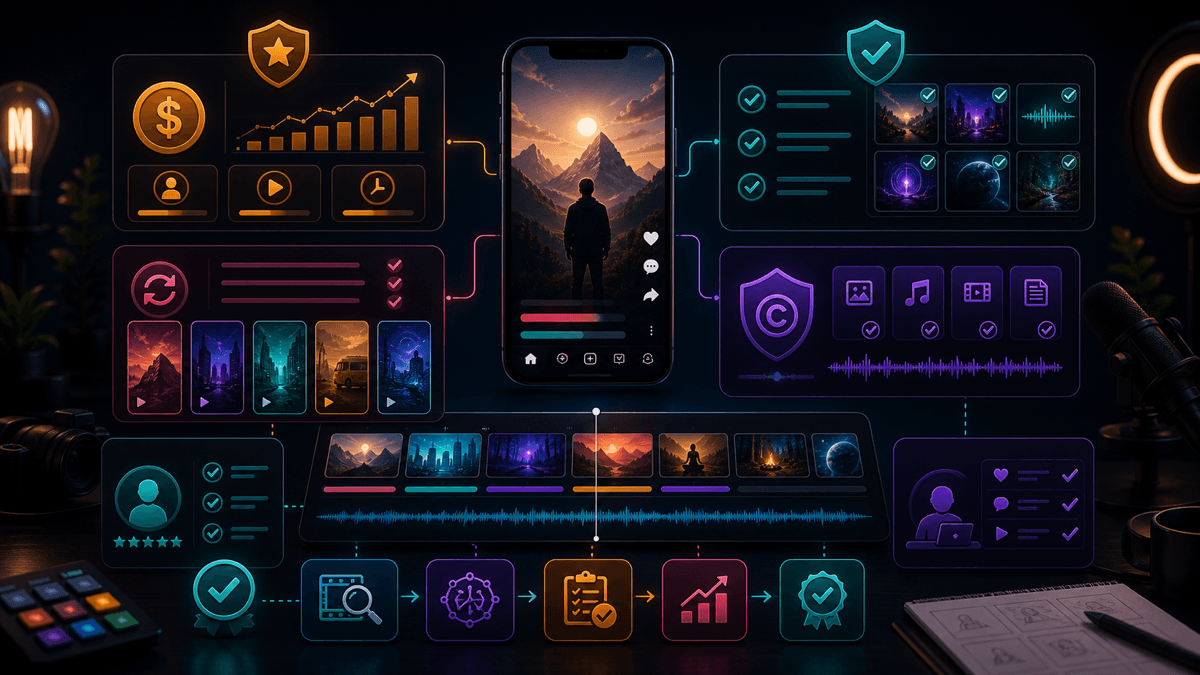
As of May 3, 2026, the current YouTube Help guidance worth keeping in mind is:
- YouTube says Shorts can be up to three minutes long for square or vertical videos uploaded on or after October 15, 2024. Source: Understand three-minute YouTube Shorts.
- YouTube says non-original Shorts, such as unedited clips or compilations with no original content added, can be ineligible for Shorts monetization. Source: YouTube Shorts monetization policies.
- YouTube says creators must disclose meaningfully altered or synthetic content when it seems realistic. Source: Disclosing use of altered or synthetic content.
For an AI-first channel, that usually leads to a simple rule: use AI to accelerate original production, not to automate empty repetition.
How To Pick Your First Faceless Channel Idea
Use this three-part filter:
- Pick a niche where you can write 50 useful hooks without getting bored.
- Pick a visual style you can reproduce quickly.
- Pick a promise viewers will understand in one sentence.
A bad niche choice sounds like:
- "random motivational content"
- "viral facts"
- "general AI videos"
A better niche choice sounds like:
- "one productivity lesson for solo founders every weekday"
- "one practical AI tool tutorial for creators in under 45 seconds"
- "one surprising history lesson with a business takeaway"
That level of specificity makes your scripts better and your channel easier to recognize.
If you want the niche to connect directly into a creation workflow, start with our guide on how to make faceless videos with AI, then use the AI YouTube Shorts generator for the first batch of scripts and video drafts.
A Practical AI Workflow For Faceless Shorts
The cleanest way to launch is:
- Pick one niche and one repeatable format.
- Write 10 hook ideas before you make the first video.
- Turn each hook into a 30-90 second script.
- Generate visuals, voiceover, and captions in one pass.
- Review only the first two scenes, pacing, and caption clarity.
- Publish consistently and keep the top-performing structure.
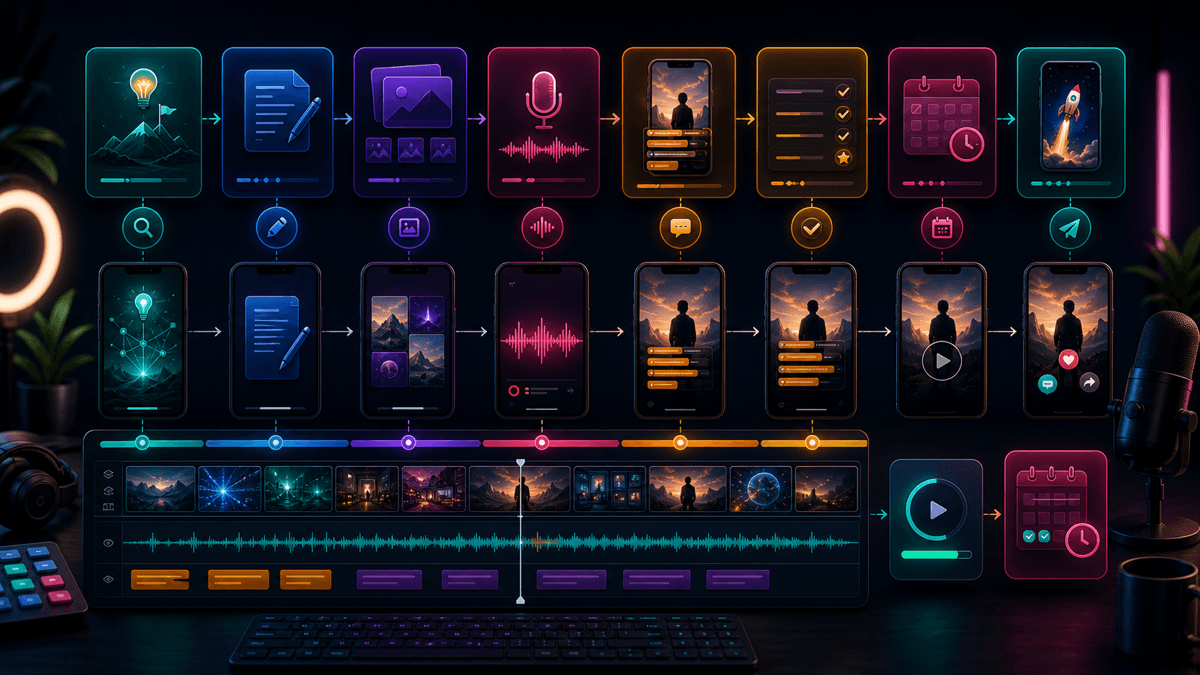
An end-to-end system helps because a patchwork setup gets slow before the channel has traction. If you build each Short by moving between a script app, image app, voice app, caption app, and editor, every extra handoff becomes friction. SwipeStory fits consistent output because it is built around turning prompts or scripts into vertical videos with visuals, voiceovers, captions, music, editing, rendering, and scheduled publishing.
If you also want a broader category view before committing to one workflow, read our roundup of the best AI faceless video generators.
Common Mistakes To Avoid
Picking a niche with no opinion
If every video sounds interchangeable, the channel becomes forgettable fast.
Confusing faceless with effortless
AI reduces production time. It does not replace the need for a clear angle.
Chasing every trend
A stable series beats random experimentation most of the time.
Ignoring channel setup basics
YouTube's current channel setup docs still matter. YouTube Help says creators can create a channel with a personal account or a Brand Account, and its channel customization docs say the channel profile area includes your name, handle, description, links, branding, and home layout. Those details affect whether a faceless channel still feels credible. Sources: Create a YouTube channel and Channel customization.
Final Recommendation
The best faceless YouTube channel ideas are not the flashiest ones. They are the ones that make originality easy and consistency realistic.
If you want the safest bet, start with AI tool tutorials, productivity systems, history shorts, brand breakdowns, or career advice. Those niches work well with narration, visual storytelling, and repeatable scripting. They also fit an AI workflow without forcing you into recycled content.
If you want to publish quickly, build your first ten ideas around one promise, then turn them into Shorts with SwipeStory. The faster path is not "more random ideas." It is one strong format repeated well.
Frequently Asked Questions
What is the best faceless YouTube niche for beginners?
AI tool tutorials, productivity systems, and career advice are strong starting points because they are easy to script, easy to visualize, and easy to turn into short series.
Can faceless YouTube channels still get monetized?
Yes, but the channel still needs to meet YouTube's current eligibility thresholds and follow its monetization rules. Faceless is fine. Non-original or mass-produced content is the bigger risk.
Are faceless YouTube Shorts still worth starting in 2026?
Yes. Shorts still offer a practical growth path, especially if your niche is clear and your scripts are built around strong first lines.
Do I need to show my real voice?
No. Many faceless channels use AI voiceover or narrated text-based formats. If the content is realistic and meaningfully altered with AI, follow YouTube's disclosure guidance during upload.